• Skip to primary navigation
  • Skip to main content
Core Information Technologies Ltd.

Core Information Technologies Ltd.

Managed IT Services

  • Home
  • Cyber Security
  • Services
    • Data Backup & Recovery
    • IT Support
    • Managed IT Services
  • About Us
  • Contact Us
  • Portals
    • Remote Support
    • Invoice Payment
    • Shared Files
    • KB Login
    • Core IT’s Blog
  • Show Search
Hide Search

Uncategorized

How the Coronavirus crisis is the gateway to the other kind of virus

Joshua White · August 30, 2022 ·

How the Coronavirus crisis is the gateway to the other kind of virus

To say the COVID-19 pandemic gave the whole world a tough time would be an understatement. Economies collapsed, joblessness rose, people lost their loved ones and livelihoods to the disease. Adding to this situation was the need for social distancing and self-isolation which took a toll on mental health of millions across the world. 10 months into the pandemic or perhaps even before, people started growing tired of it and just when it seemed like humankind will give up collectively, there was a light at the end of the tunnel–Vaccines.

While the news of the first vaccine being approved and then administered in December 2020, was a huge victory for humankind and rightly welcomed with claps and cheers, cybercriminals were cheering too. For cybercriminals, this was a great opportunity to exploit the eager, mentally fatigued and vulnerable populace. Emails were sent with phishing links disguised as genuine which urged the recipients to fill a form to access their vaccination schedule and vaccine information. Some emails were made to look like it came from the FDA, United States CDC or the NHS (UK). Some had attachments that required recipients to download them and run exe (executable) files that planted malware into their systems. “E-commerce” sites were created overnight on the dark web and enticed people into ‘placing orders for vaccines’ at $250 each, in the ‘Black market’.

The point is, this is not the first organized cybercrime modus operandi and certainly won’t be the last. So, how do you protect yourself? Here are a couple of tips.

  • Do not download or open attachments or click on links from unknown, unverified sources or a source that you don’t trust.
  • Sometimes, the email or message may seem to be from someone you trust, but their account may have been compromised and used to send out the malicious link or attachment to you. Or, there may be a slight variation in the email ID (spelling), so while you get the impression it is a genuine email, the reality is different.
  • If something doesn’t add up, or if it doesn’t feel like the message was in fact written by the person you know, either ignore or call and verify if they did indeed send it to you.
  • Install firewalls that have the capability to identify and block dangerous sites, so you will be alerted of possible security threats and inadvertent clicks won’t take you to dubious clone sites
  • Make sure your antivirus software is up-to-date

From a business perspective, discuss a strong cybersecurity plan of action with an MSP. This includes investing in the right anti-malware tools, ensuring all your software programs are updated, and updating security patches released by your software vendors as soon as they are available. Educate your staff on common cybercrime tactics so they don’t accidentally expose your IT network to cybercriminals.
Your employee’ social media account was hacked How does it affect you?

Joshua White · August 23, 2022 ·

Your employee’ social media account was hacked. How does it affect you?

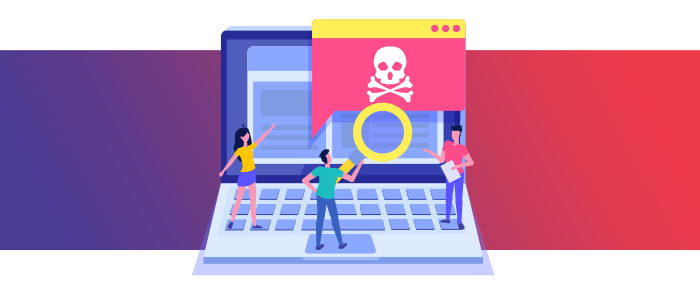
Did you know that social media accounts are one of the favorite targets for cybercriminals? You may think cybercriminals would prefer to hack online banking accounts or shopping accounts, but that doesn’t seem to be the case. Here’s why. Social media accounts hold A LOT of personal information including name, email ID, date of birth, place of birth, place of work (your business!) high school attended, names of family, friends and pets, anniversaries, and more…which means, they are basically gold mines of Personally Identifiable Data (PII). Plus, if you play games and have your credit card details saved, there’s more information and better the chances for the cybercriminal to commit fraud. All of this data can then be used to hack into other accounts of the user, including financials. So, hacking into someone’s social media account can help cybercriminals gain entry into other, more ‘useful’ and secure accounts.

But, how does it matter to you, as a business? If your employee’s personal social media account is hacked, it shouldn’t affect you, as a company, right? Wrong…here’s how it can affect you.

  • If the employee whose social media account is hacked is the administrator of your company’s official social media handles, you are in big trouble as hackers will gain access to your company account and consequently to customer information, because you may be having clients who follow your business account on social media. The whole situation can result in a lot of damage to your business and brand reputation and also result in penalties and possible lawsuits.
  • Even if your employee doesn’t handle your company’s social handles, the hackers may have enough of their PII to try and pry open a small entryway into your IT network.

You can avoid such mishaps by

  • Training your staff on social media and cybersecurity best practices including advanced privacy and permission settings for social media accounts
  • Ensuring your employees are able to identify and steer clear of phishing and social media frauds
  • Helping your employees understand the importance of practicing good password hygiene across all their online accounts–social, work or personal.
  • Ensuring they realize that their Facebook or LinkedIn account is not ‘just another online socializing platform’, but an actual gold mine of information and only those who they really trust should be able to access them.
  • Sharing regular Day Zero Alerts and relevant news articles with your staff that keeps them updated on the latest modus operandi and happenings related to cybercrime

Your managed IT services provider will be able to help you in organizing and conducting these kinds of training and awareness sessions at regular intervals for your staff.

Your employee’ social media account was hacked How does it affect you?

Joshua White · August 16, 2022 ·

Your employee’ social media account was hacked. How does it affect you?

Did you know that social media accounts are one of the favorite targets for cybercriminals? You may think cybercriminals would prefer to hack online banking accounts or shopping accounts, but that doesn’t seem to be the case. Here’s why. Social media accounts hold A LOT of personal information including name, email ID, date of birth, place of birth, place of work (your business!) high school attended, names of family, friends and pets, anniversaries, and more…which means, they are basically gold mines of Personally Identifiable Data (PII). Plus, if you play games and have your credit card details saved, there’s more information and better the chances for the cybercriminal to commit fraud. All of this data can then be used to hack into other accounts of the user, including financials. So, hacking into someone’s social media account can help cybercriminals gain entry into other, more ‘useful’ and secure accounts.

But, how does it matter to you, as a business? If your employee’s personal social media account is hacked, it shouldn’t affect you, as a company, right? Wrong…here’s how it can affect you.

  • If the employee whose social media account is hacked is the administrator of your company’s official social media handles, you are in big trouble as hackers will gain access to your company account and consequently to customer information, because you may be having clients who follow your business account on social media. The whole situation can result in a lot of damage to your business and brand reputation and also result in penalties and possible lawsuits.
  • Even if your employee doesn’t handle your company’s social handles, the hackers may have enough of their PII to try and pry open a small entryway into your IT network.

You can avoid such mishaps by

  • Training your staff on social media and cybersecurity best practices including advanced privacy and permission settings for social media accounts
  • Ensuring your employees are able to identify and steer clear of phishing and social media frauds
  • Helping your employees understand the importance of practicing good password hygiene across all their online accounts–social, work or personal.
  • Ensuring they realize that their Facebook or LinkedIn account is not ‘just another online socializing platform’, but an actual gold mine of information and only those who they really trust should be able to access them.
  • Sharing regular Day Zero Alerts and relevant news articles with your staff that keeps them updated on the latest modus operandi and happenings related to cybercrime

Your managed IT services provider will be able to help you in organizing and conducting these kinds of training and awareness sessions at regular intervals for your staff.

Are your data security measures strong enough?

Joshua White · August 9, 2022 ·

Are your data security measures strong enough?

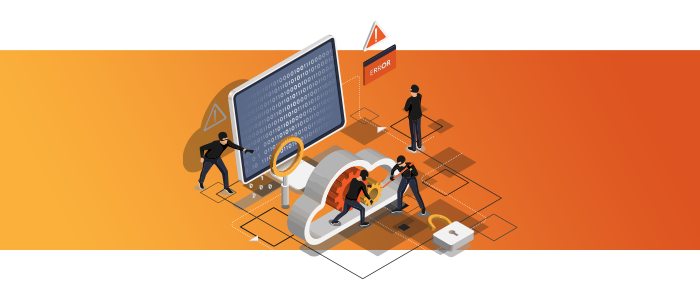
Let me start this blog by asking you a question. How did your business respond to the security threats brought on by the COVID-19 pandemic? The reason we are discussing this is because a recent survey conducted by Password Keeper and Ponemon Institute revealed that during the 2020 Coronavirus pandemic, the effectiveness of organizations’ IT posture in terms of cybersecurity dipped by almost 30%.

One of the main reasons for the compromise in IT security was the hurried transition of so many businesses to the remote work model. Working from home often meant the staff were using their personal computers to access work data, sometimes, even on shared WiFi networks without the latest software updates, security patches and firewalls–all invitations to cybercriminals. But, the research also pointed out that almost 50% of the respondents were also concerned about the physical safety of their data. When employees work from home, business data is stored on their personal devices. This includes personal laptops, desktops, thumb drives, external hard disks and sometimes, even smartphones and tablets. Ensuring the data stored in such a manner is not lost, stolen or inadvertently made public is a huge challenge. The cloud can help resolve this challenge to some extent. By migrating your data to the cloud you get a range of benefits such as

  • It is easily accessible-from anywhere, anytime using an internet enabled tablet, computer or even a smartphone
  • The cloud service provider offers multiple layers of security to keep your data safe from prying eyes
  • There is no chance of losing data due to misplaced thumb drives or computer hard disk crashes

An MSP offering cloud services will be able to assist you in making the transition from physical data storage to the cloud smoothly. They can also address cybersecurity concerns and offer solutions. However, migrating to the cloud alone is not the solution to all data security issues. You will still need to train your staff on how to identify and avoid malware attacks, phishing scams and to practice basic password hygiene and data security best practices.

Are your data security measures strong enough?

Joshua White · August 2, 2022 ·

Are your data security measures strong enough?

Let me start this blog by asking you a question. How did your business respond to the security threats brought on by the COVID-19 pandemic? The reason we are discussing this is because a recent survey conducted by Password Keeper and Ponemon Institute revealed that during the 2020 Coronavirus pandemic, the effectiveness of organizations’ IT posture in terms of cybersecurity dipped by almost 30%.

One of the main reasons for the compromise in IT security was the hurried transition of so many businesses to the remote work model. Working from home often meant the staff were using their personal computers to access work data, sometimes, even on shared WiFi networks without the latest software updates, security patches and firewalls–all invitations to cybercriminals. But, the research also pointed out that almost 50% of the respondents were also concerned about the physical safety of their data. When employees work from home, business data is stored on their personal devices. This includes personal laptops, desktops, thumb drives, external hard disks and sometimes, even smartphones and tablets. Ensuring the data stored in such a manner is not lost, stolen or inadvertently made public is a huge challenge. The cloud can help resolve this challenge to some extent. By migrating your data to the cloud you get a range of benefits such as

  • It is easily accessible-from anywhere, anytime using an internet enabled tablet, computer or even a smartphone
  • The cloud service provider offers multiple layers of security to keep your data safe from prying eyes
  • There is no chance of losing data due to misplaced thumb drives or computer hard disk crashes

An MSP offering cloud services will be able to assist you in making the transition from physical data storage to the cloud smoothly. They can also address cybersecurity concerns and offer solutions. However, migrating to the cloud alone is not the solution to all data security issues. You will still need to train your staff on how to identify and avoid malware attacks, phishing scams and to practice basic password hygiene and data security best practices.

  • Page 1
  • Page 2
  • Page 3
  • Interim pages omitted …
  • Page 8
  • Go to Next Page »

Core Information Technologies Ltd.

Copyright © 2026 · Core Information Technologies Ltd. · Log in